 Jondob Games · JMB
Any multiplayer game, made easy.Everything your game needs, in one package.
A feature-rich, indie-friendly multiplayer backend, built for every kind of game. Continuously updated, with quick support, and first-party Godot 4 SDK.
You make the game. We handle the backend.
Multiplayer is a mountain of work. Sessions, presence, matchmaking, persistence, security. JMB handles all of it, so you build your game, not its plumbing.
Account integration
Email and password, or Steam login.
Player & world data
Save anything per player or per world, like stats, inventories, and progress.
Friends & chat
Friend requests, presence, DMs, chat rooms, and blocking.
Server modes
Quick matches or persistent worlds that stay online.
Leaderboards
Any player stat becomes a leaderboard.
Security
Industry-standard protection, built in.
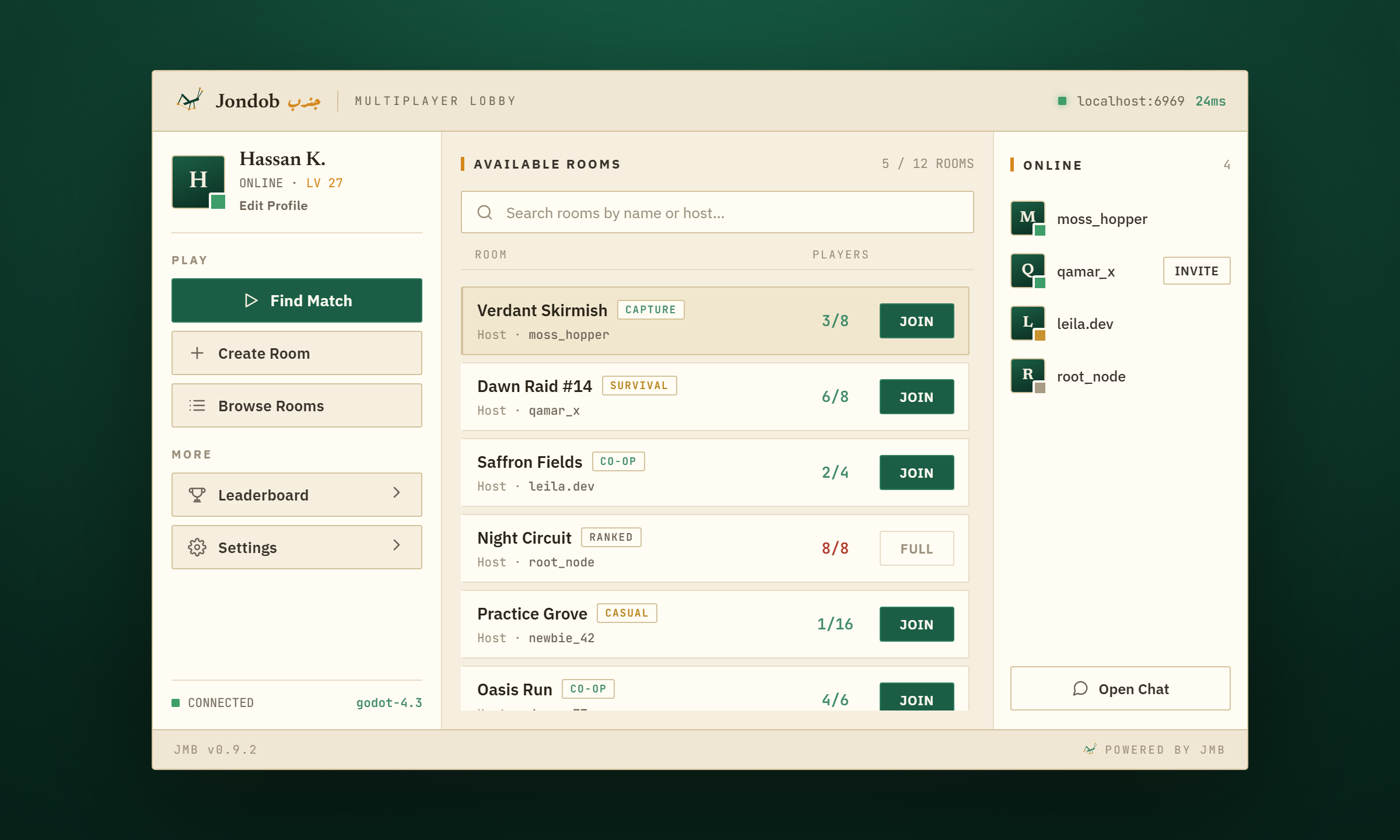
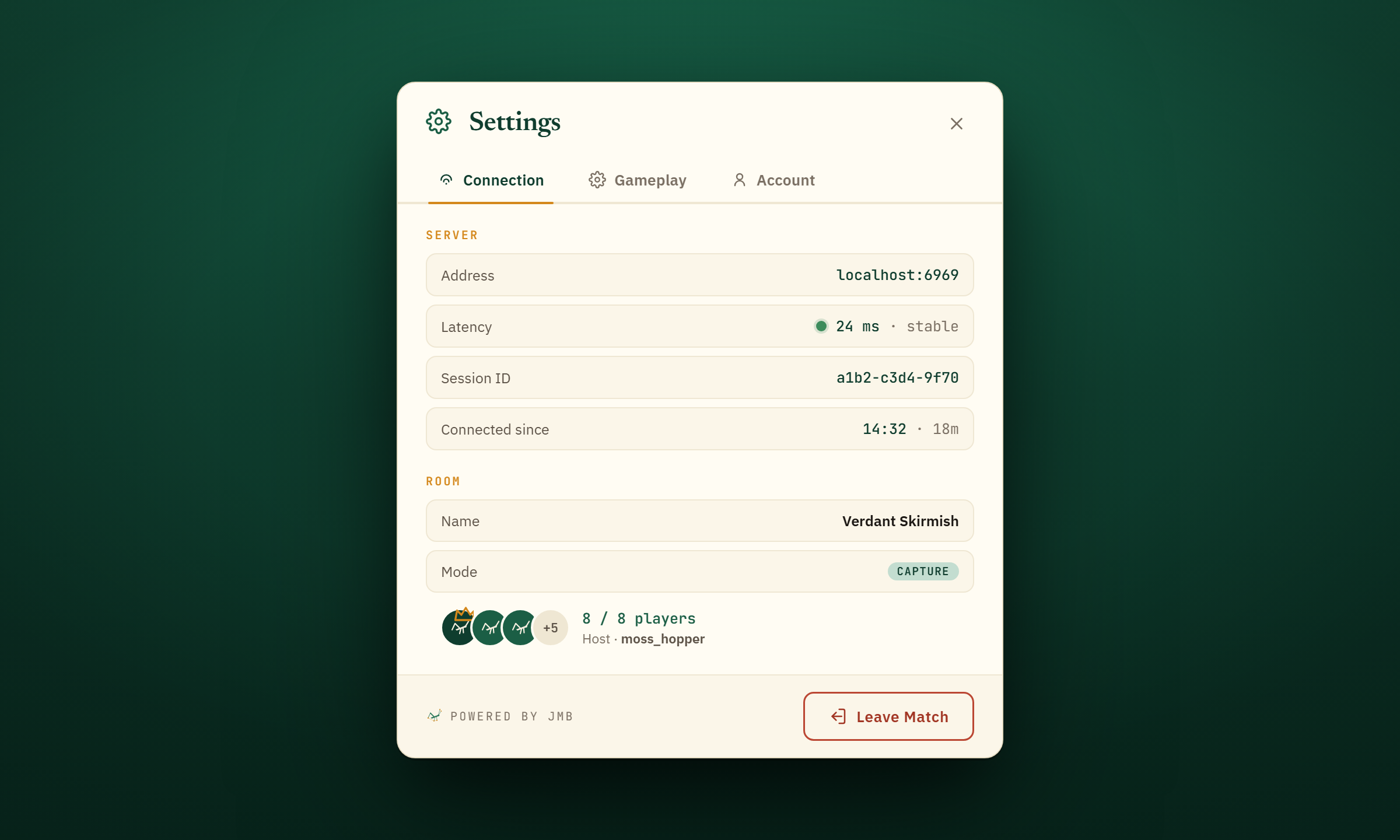
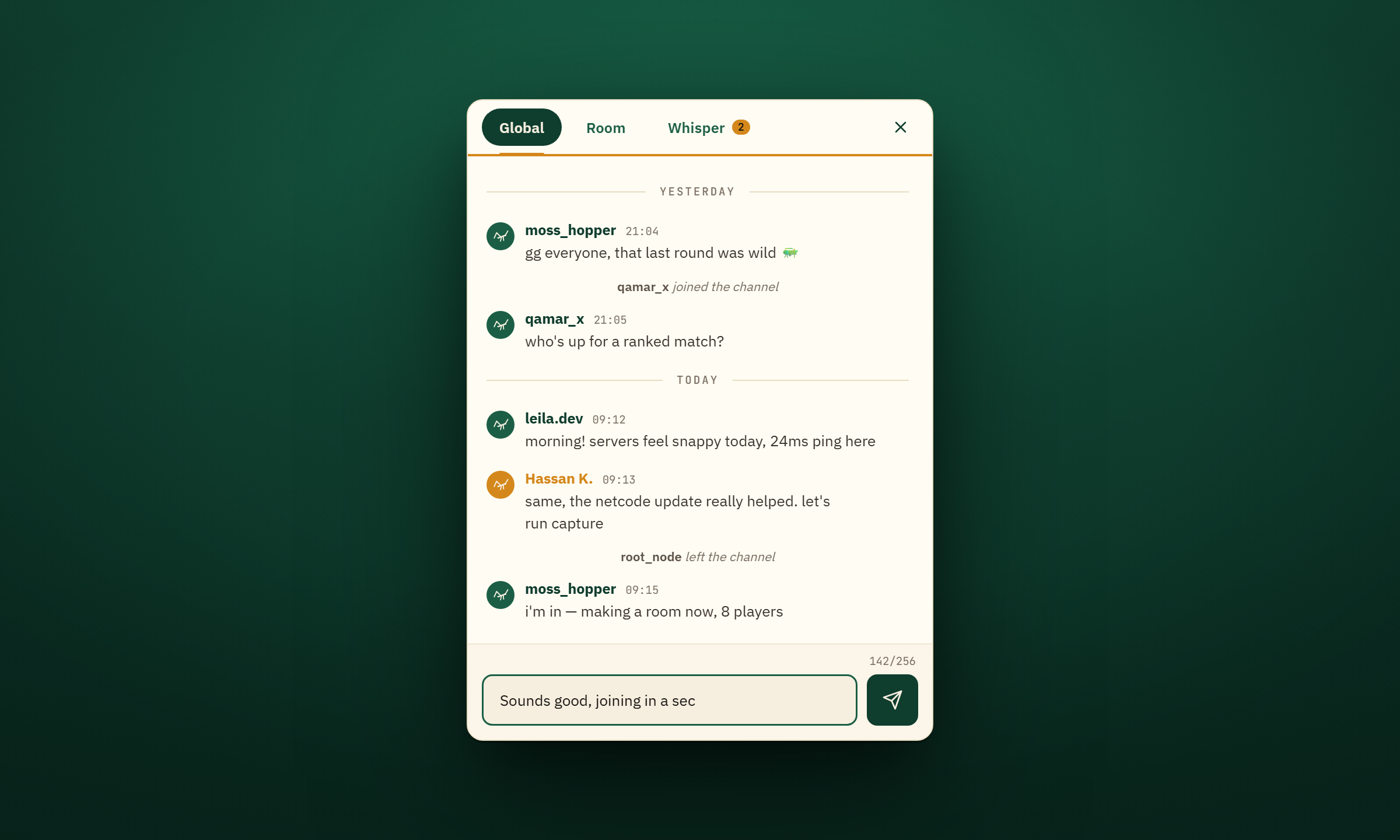
Run it. Drop it in. Ship.
No vendor account. No SDK key. No complicated dashboard. No unpredictable payments.
Run the binary.
Run the server on any VPS, no constraints. You own everything: easy backups, easy data transfer, and quick, easy setup.
Drop in the SDK.
Update the config. Create your own menus, or use our premade demos and customize them as you wish.
Ship it.
Focus on making your game great, and let us do the complicated backend stuff.
JMB vs the field.
You are minutes from multiplayer.
Run the binary, drop in the SDK, and point it at your server. The getting started guide walks you through the rest.
Common questions.
What is JMB and what does it do?
JMB, the Jondob Multiplayer Backend, is a self hosted multiplayer backend for Godot 4. It gives your game accounts, lobbies, friends, chat, player and world data, and leaderboards: you run one server binary, drop the GDScript SDK into your project, and ship.
Is there a self hosted alternative to PlayFab or Nakama for Godot?
Yes. JMB covers the ground PlayFab and Nakama cover, accounts, lobbies, friends, chat, player data and leaderboards, but it is self hosted on your own server, built only for Godot, and sold as a one time purchase instead of a subscription.
Can I add multiplayer to a Godot game without Docker?
Yes. JMB ships as a single binary, with no Docker, no Kubernetes and no container setup. Download it, run it, and point the SDK at your server. The server runs on Windows, macOS and Linux, the SDK runs anywhere Godot exports to, and crossplay works by default.
Which Godot versions does JMB support?
JMB supports Godot 4.6 and newer. The SDK is plain GDScript, so there are no native extensions to match to your engine build.
How much does JMB cost to run?
There are no subscriptions and no per player or usage based fees; the only recurring cost is whatever server you run it on. A 5 USD VPS from Hetzner, DigitalOcean or Linode is enough to start, and you can scale up later if your game needs it.
Can I use JMB in commercial games, and how does the license work?
Yes. JMB is royalty free and made for commercial games. The indie license is 50 USD and covers teams of up to 9 people. Teams of 10 or more need the pro license, 300 USD, which covers the entire studio. No royalties, no recurring fees, free updates forever.
Do I have to host the game servers myself?
Yes. Game instances are dedicated server builds of your game, running on your own VPS or machine alongside the JMB server. Players never host matches themselves, which keeps every match server authoritative and under your control.
How many players can JMB handle?
JMB is written in Go, the language built for large scale network services. Each connection is served by a pair of lightweight goroutines, every message is rate limited, and the whole server ships as one optimized native binary. On a modest VPS the architecture comfortably handles thousands of concurrent connections; the practical ceiling is usually your game's message rate and database load rather than the player count.
What login and account options does JMB support?
Steam login and email login are already implemented, and more login methods are under development. Accounts and sessions are managed by the server out of the box, so there is no account system to build yourself. Logged in players can change their password and email; password reset by email is not available yet.
Does JMB include matchmaking, friends and chat?
Lobbies are built in today, alongside friends and chat, so players can find each other and talk from day one. Matchmaking and parties are in development; the Discord and the newsletter below announce each release.
How do I define more variables for the player, the world, or in general?
It is all simple configs. You add the variable to a JSON text file and that is it. Player, world and general purpose variables are all defined the same way, no code required.
What kinds of game modes does JMB support?
Match and instance based games, persistent worlds, and async multiplayer are supported today; async covers data driven games with no realtime player sessions, in the spirit of classic browser games like FarmVille. Relay support is in development.
Do I need to set up a database?
No. JMB works out of the box with SQLite and also supports PostgreSQL for bigger projects. Automatic database backups are built in.
How does JMB handle security and cheating?
Every request is authenticated and rate limited, passwords are hashed with Argon2id, sessions are device bound, and anti replay protection is built in. Sensitive writes can be restricted to your dedicated game instances, which authenticate separately from players, and gameplay validation runs in your server build of the game, so clients are never trusted.
Does JMB replace Godot's networking?
No, they work together. Godot keeps doing realtime gameplay networking inside a match, while JMB handles everything around it: accounts, lobbies, friends, chat, player and world data, and coordinating your dedicated game instances. Your game servers register with JMB, receive matches from lobbies, and report players joining and leaving.
Can I add custom server logic?
Game rules live in your own dedicated instance, which is your Godot code, so custom logic is just GDScript. On the backend side, behavior is driven by JSON configs: variables, lobby rules, endpoint toggles, instance definitions and lifecycles are all files you edit.
Who owns my game's data?
You do, entirely. Data lives in SQLite or PostgreSQL on your own server, automatic backups are built in, and nothing is stored with a third party. If you ever want to move, it is a standard database you can take with you.
Where do I get help?
Start with the getting started guide. For anything else, ask in the Discord or email info@jondobgames.com. Support comes straight from the developer and is included with the purchase.
Get notified.
Our latest games, tools, beta programs and news, straight to your inbox.
Thanks joining, you’re on the list !